
Affiliate Disclosure: Tipontech is a participant in the AliExpress Affiliate Program. I may earn a commission when you click through and purchase, at no extra cost to you. I only recommend gear I’d carry in my own cars.
Tip: AliExpress sometimes shows extra coupons or new-user offers in its app. Availability varies by country and account, so check before you pay.
Every driver should carry a basic roadside emergency kit — but most don’t. It’s 11 PM. You’re 40 miles from the nearest town. The dashboard pings. Tire pressure drops. Or the engine sputters. Or the fuel needle finally drops below E. Now what?
According to AAA, roughly one in three drivers experiences a roadside breakdown every year — and most of them are completely preventable with the right preparation. The difference between a 20-minute inconvenience and a 4-hour nightmare almost always comes down to one thing: the gear in your trunk.
I put together this guide after going through hundreds of real driver reports, AAA roadside statistics, and AliExpress’s massive selection of car emergency equipment. The goal: tell you exactly what to do in the three most common roadside emergencies, and exactly what to carry so you can fix the problem yourself — or at least stay safe until help arrives.
Quick verdict (TL;DR):
- ✅ A basic roadside emergency kit with these 5 items handles 90% of roadside problems on your own — from flat tires to dead batteries.
- ❌ Skip the $80 “premium emergency kits” sold at auto parts stores — assemble your own from AliExpress for less than half the price and double the quality.
- 🎯 The single most useful tool: A portable jump starter with built-in air compressor. It replaces needing another car, jumper cables, a willing stranger — and a separate tire inflator.
🏆 Quick Picks — 5 Roadside Essentials
In a hurry? Here are the 5 items every driver should have in their car right now. I cover the full 9-piece kit below.
| Rank | Item | Why You Need It | Get It |
|---|---|---|---|
| 🥇 | UTRAI 5-in-1 Jump Starter + Inflator | 2-in-1: jumps dead batteries and inflates tires | Check Price → |
| 🔧 | Scissor Jack + Wrench | Essential for changing a flat — comes with lug wrench | Check Price → |
| 🛞 | Tire Repair Kit | $10 lifesaver — plug a puncture in 5 minutes | Check Price → |
| 🚨 | LED Warning Triangle | Visibility = survival when stopped on the road | Check Price → |
| ⛑️ | Car First Aid Kit | Legally required in many countries, always useful | Check Price → |
Prices and stock can change — links open on AliExpress with my affiliate tracking.
The 3 Most Common Roadside Emergencies — and What to Do
Statistics from AAA show that 80%+ of all roadside calls fall into just three categories: flat tires, dead batteries, and running out of fuel. Master these three scenarios and you’ll handle almost any situation calmly.
🛞 Scenario 1: Flat Tire or Puncture
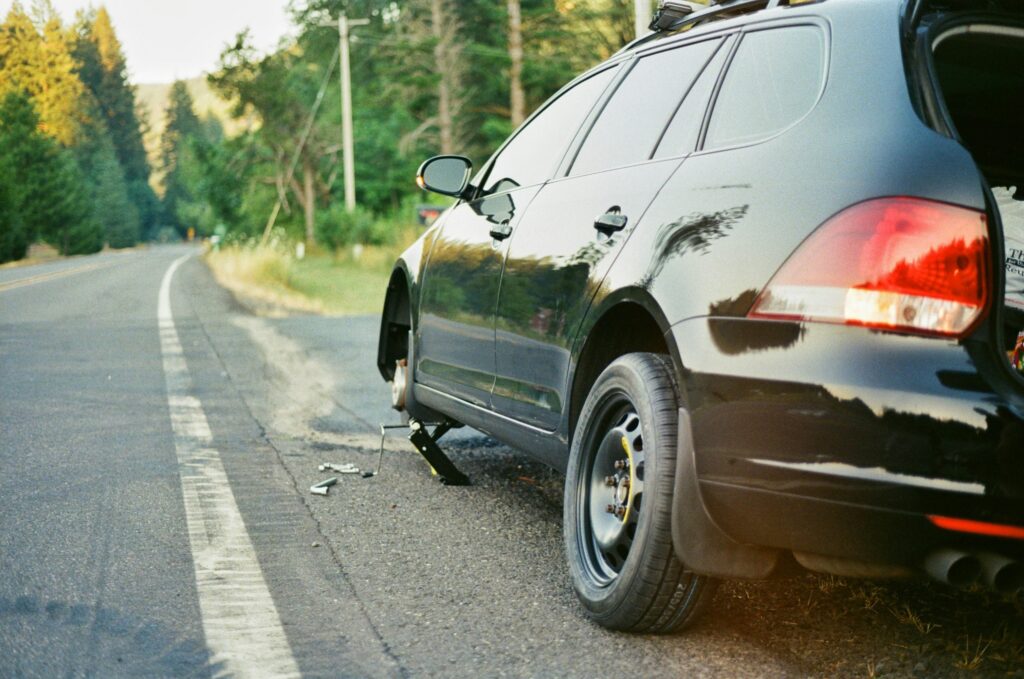
By far the most common roadside emergency. AAA handles around 30 million tire-related calls per year in the US alone. The good news: most flats are slow leaks you can fix or limp to a station with — not catastrophic blowouts.
What to do, step by step:
- Pull over safely. Get fully onto the shoulder or, ideally, off the road completely. Turn on your hazard lights immediately.
- Assess the damage. Slow leak? You can drive a mile or two to a gas station. Blowout or shredded tire? Don’t move the car — change the wheel where you are.
- Pick your fix. Three options: (a) plug it with a tire repair kit if it’s a small puncture, (b) pump it up with a cordless inflator and limp to a shop, or (c) swap to the spare.
- If swapping the wheel: Chock the opposite wheels with rocks, loosen the lug nuts before jacking the car up, lift, swap, lower, then fully tighten in a star pattern.
Gear needed: Scissor Jack + Lug Wrench, tire repair kit, cordless inflator. (All four covered in the kit section below.)
⛽ Scenario 2: Running Out of Fuel
Embarrassing, but more common than people admit — AAA reports over 800,000 out-of-fuel rescues per year. Modern fuel gauges aren’t always linear, so “1/8 tank” can vanish faster than you think on a long downhill or in stop-and-go traffic.
What to do, step by step:
- The moment your low-fuel light comes on: find the nearest gas station immediately. Don’t push it. Most cars give you 30–50 miles of range after the light — but in headwinds, hills, or A/C use, it can be far less.
- If you actually run out: Pull over safely, hazards on. Don’t try to coast further — running on fumes can damage the fuel pump.
- Get fuel. Three options: (a) walk to a station with a portable jerry can, (b) call roadside assistance for a fuel drop, or (c) use a mobile fuel delivery app where available.
- Never try to siphon from another car’s tank — modern cars have anti-siphon valves that make it impossible (and you’ll destroy your siphon hose trying).
🔋 Scenario 3: Car Won’t Start (Dead Battery)
The single most common reason drivers call for roadside help — especially in winter, when cold weather can drop battery capacity by 30–50%. The other classic cause: interior lights or headlights left on overnight.
What to do, step by step:
- Check the obvious first. Is the car in Park (or Neutral for manuals)? Is your foot on the brake? Are the battery terminals tight and corrosion-free?
- Listen. Click-click but no engine crank = dead battery. Crank but no start = could be fuel or ignition. Silence with dashboard lights dim = definitely battery.
- Jump start. If you have a portable jump starter, this takes 60 seconds — clamp the leads (red to positive, black to ground), press the button, start the car. If using another vehicle, follow the same order, then let it run for a minute before starting yours.
- After a successful jump: Drive for at least 20–30 minutes to fully recharge the alternator. If you turn the car off too soon, you’ll be jumping it again in the morning.
Gear needed: A portable jump starter. Older “jumper cables” still work, but require a second car and a willing stranger. A modern lithium-ion jump starter is the size of a paperback book and replaces all of that.
How to Stay Safe While You Wait
Here’s the harsh truth most “emergency kit” articles skip: the roadside is one of the most dangerous places to stand. Cars don’t see you. They especially don’t see you at night, on a bend, in rain, or when their driver is checking a phone. Around 300 people per year in the US alone are killed standing next to broken-down vehicles.
If you’re stopped on the road — even for two minutes to swap a tire — follow this 5-step safety protocol:
- Pull as far off the road as physically possible. Onto the shoulder, then a few feet beyond if there’s grass or dirt. Distance from traffic = survival.
- Turn your hazard lights on immediately — even in broad daylight. Other drivers need every cue you can give them.
- Place a warning triangle or LED beacon 50–100 feet behind your car. This gives approaching drivers 3–5 seconds to react. Without it, they have less than 1 second.
- Put on a reflective vest before stepping out. Drivers see hi-vis colors before they see human shapes. A $5 vest is the cheapest life insurance you can buy.
- Work on the side away from traffic. Never stand or kneel on the road-facing side of your car if you can possibly avoid it. If your flat is on the traffic side, consider calling for help instead of changing it yourself.
One more thing: Don’t sit inside your car on a busy highway. If a distracted driver rear-ends your stopped vehicle at 60+ mph, the impact is severe. Stand off the road, behind a barrier or guardrail if there’s one. Wait for help from a safe distance.
Now that you know what to do — let’s go through the 9-piece kit that lets you actually do it.
The Complete Roadside Emergency Kit — 9 Essentials Reviewed
I picked these 9 items from AliExpress based on three rules: real brands or verified manufacturers, 4.5+ star ratings with hundreds of reviews, and Choice shipping where possible. None of these are speculative picks — they’re the gear I’d actually carry.
🔋 UTRAI 5-in-1 Jump Starter + Air Compressor — Best 2-in-1 Tool

If you only buy one item from this list, make it this one. The UTRAI combines two of the three most-needed roadside tools into a single device — it will jump-start a dead car battery and pump up a flat tire from the same unit.
| Spec | Detail |
|---|---|
| Modes | Car, motorcycle, bicycle, basketball inflator, blower and custom mode (per the listing) |
| Peak current | 6,000A (the listing says it supports vehicles up to 16V) |
| Air compressor | Built-in, 150 PSI, 165 L/min airflow |
| Extras | PD 30W power-bank output, digital display |
| Price range | ~$103 |
What I like: The combo factor is genuinely useful. Dead battery and a slow leak? One device handles both. The 6,000A peak rating is far more than most cars need (you really only need 1,500–2,000A), which gives headroom in cold weather when batteries struggle. It also works as a PD 30W power bank for your phone.
What to know: Charge it every 3 months even if you don’t use it. Lithium batteries self-discharge slowly, and a dead jump starter is useless when you need it. Keep it in the trunk, not in extreme heat.
Bottom line: The single most useful purchase on this list. Replaces jumper cables, a willing stranger, and a separate tire inflator — all in one charge.
🛞 Tire Repair Kit — Best for Quick Puncture Fix
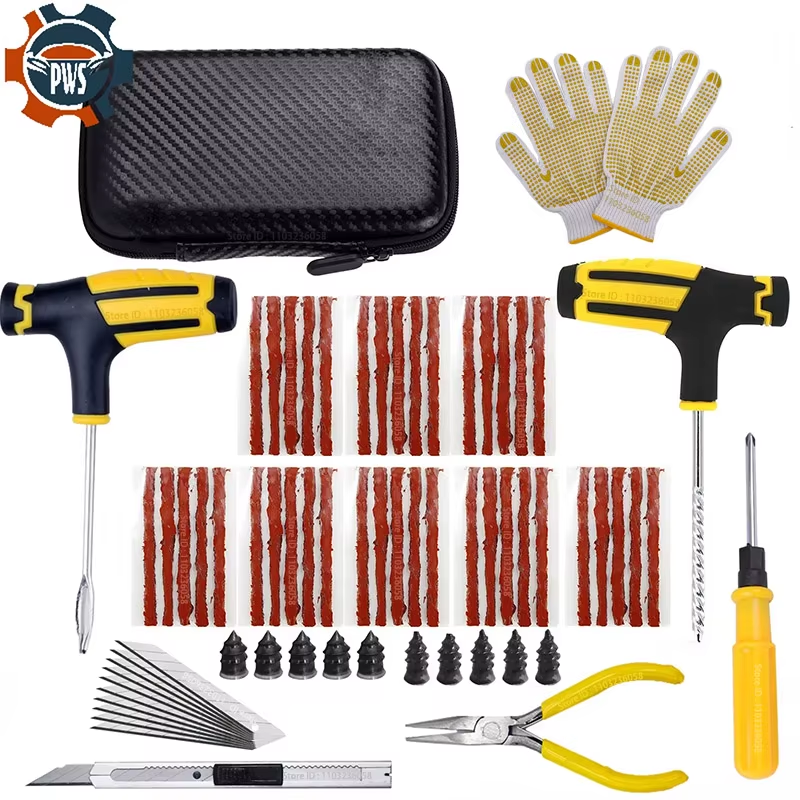
A small puncture from a nail or screw doesn’t need a tow truck — it needs a $12 plug kit and five minutes. This kit has everything: rubber strips, T-handle insertion tools, a reaming tool, pliers for nail removal, and even gloves.
| Spec | Detail |
|---|---|
| Plug strips | 30+ self-vulcanizing rubber strips |
| Tools | T-handle insert tool, rasp tool, pliers |
| Extras | Work gloves, valve cores, replacement caps |
| Storage | Compact zip case |
| Price range | $10–15 |
What I like: No need to remove the tire from the wheel — you plug it from the outside while the tire is still on the car. After plugging, just pump it back up with the UTRAI and drive off. Most plugs hold for years (you should still get it patched professionally eventually, but the plug buys you that time).
What to know: Plug kits work on tread punctures only — not sidewall damage. If the puncture is on the side of the tire, the tire is unsafe and must be replaced. Also: practice once at home before you need to do it on a dark roadside.
Bottom line: $12 of insurance against a $150 tow and a lost half-day. The cheapest high-value item in this kit.
🔧 2-Ton Scissor Jack + Lug Wrench — Best Tire Change Combo
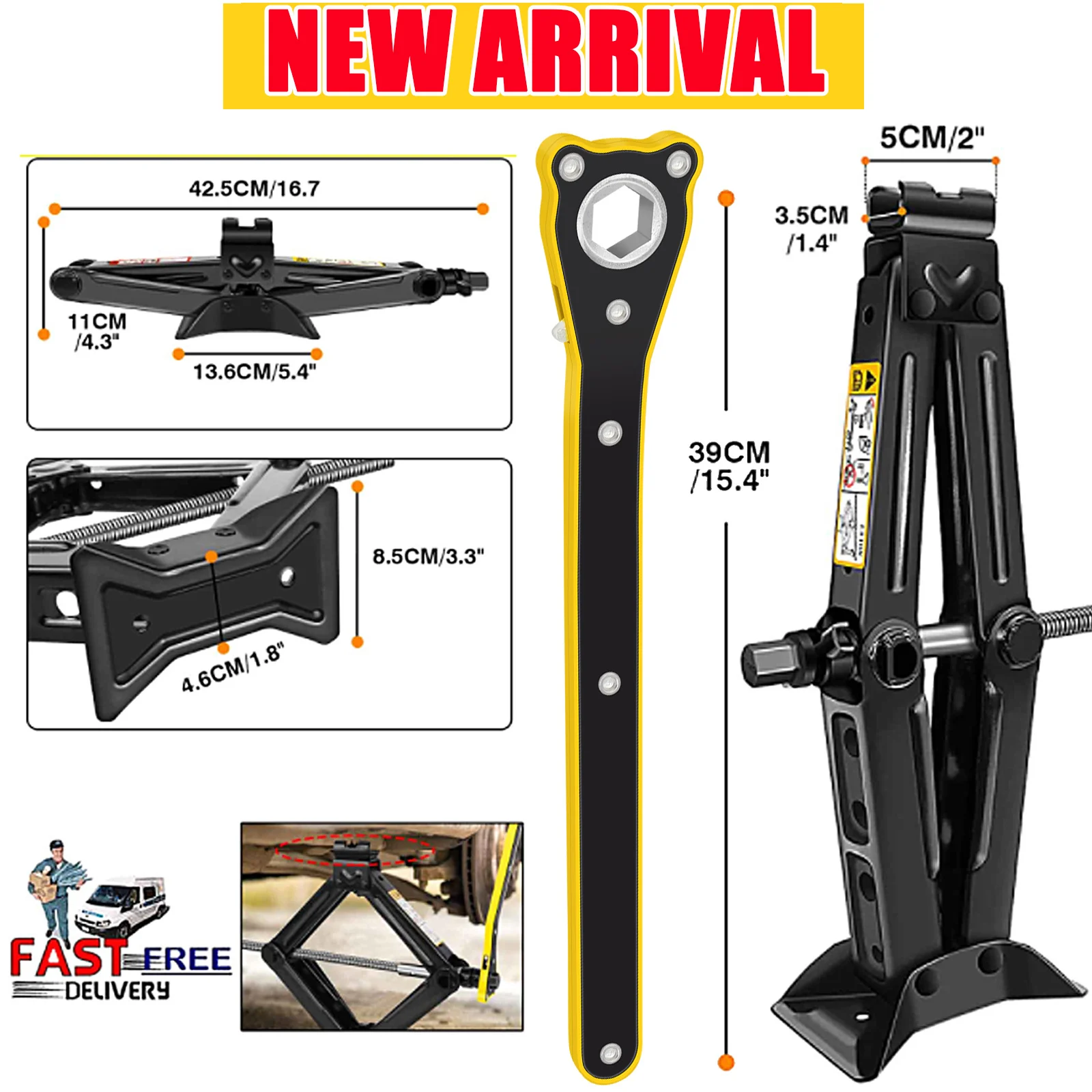
Most cars come with a factory scissor jack — but they’re usually flimsy, stiff to operate, and the lug wrench is sized only for your specific car. This aftermarket set upgrades both: a 2-ton scissor jack plus a hexagonal lug wrench.
| Spec | Detail |
|---|---|
| Capacity | 2 ton |
| Height range | 105 mm to 385 mm (about 4 to 15 inches) |
| Wrench | Hexagonal lug wrench, labor-saving design |
| Sold by | AExpress-XinFu Tools Store |
| Price range | ~$27 |
What I like: The listing describes a labor-saving hexagonal lug wrench, which helps when you have to turn a stiff lug nut in cold weather. The jack is rated for 2 tons and extends from 105 mm to 385 mm.
What to know: Match the capacity to your car’s curb weight — 2 tons handles most sedans; for SUVs and small trucks, check your owner’s manual and consider a higher rating. Always place the jack on a solid jacking point (your owner’s manual shows where).
Bottom line: A budget upgrade over a worn factory jack. Reviews are thin (4.6★ across 45 reviews), so inspect it when it arrives and don’t wait for a flat to try it.
🚨 LED Warning Triangle + Beacon — Best Roadside Visibility
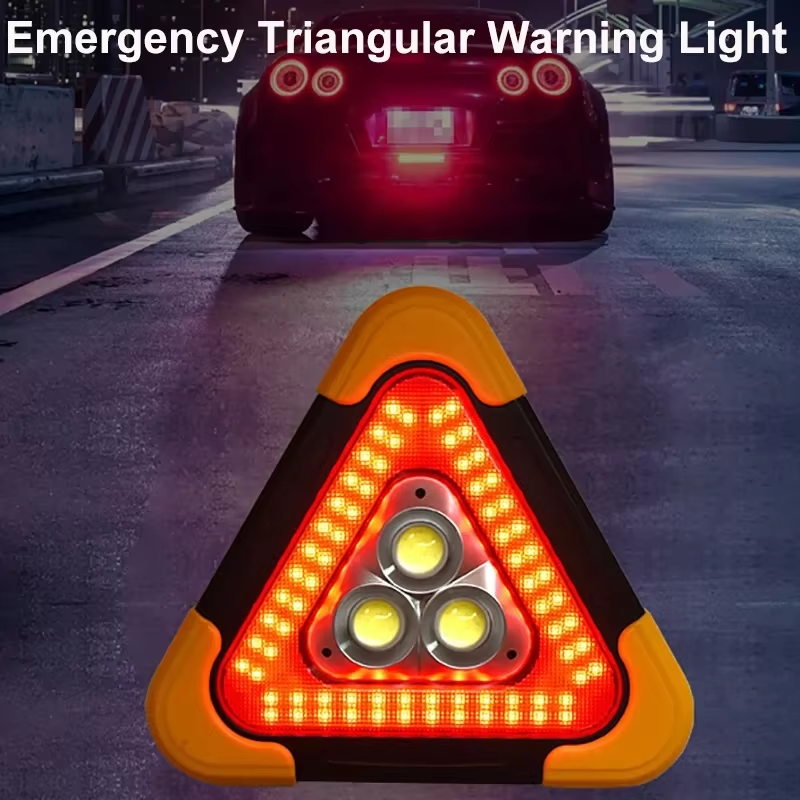
This is a clever 3-in-1 upgrade over the boring reflective triangle most drivers carry. It’s a warning triangle, a powerful LED work light, and a USB power bank — all in one rechargeable unit you place 50+ feet behind your car.
| Spec | Detail |
|---|---|
| Display modes | Steady red, flashing red, white work light |
| Power | Rechargeable lithium battery |
| USB output | Yes — can charge phone in emergencies |
| Mounting | Folding stand for road use |
| Price range | $15–25 |
What I like: The flashing red is visible from 300+ feet away — far better than a static reflective triangle. The built-in white work light means you can illuminate your jack work without needing a separate flashlight. And the USB output has saved more than a few drivers whose phones died right when they needed them most.
What to know: Check your country’s laws — some places require a specific reflective triangle (with EU certification or DOT marking) as the primary warning device. This unit is an excellent supplement, but you may still legally need a basic reflective triangle as backup.
Bottom line: Triple-duty roadside tool. The LED visibility alone is worth it, and the USB power bank is a genuine emergency lifesaver.
⛑️ Car First Aid Kit — Best Medical Essentials
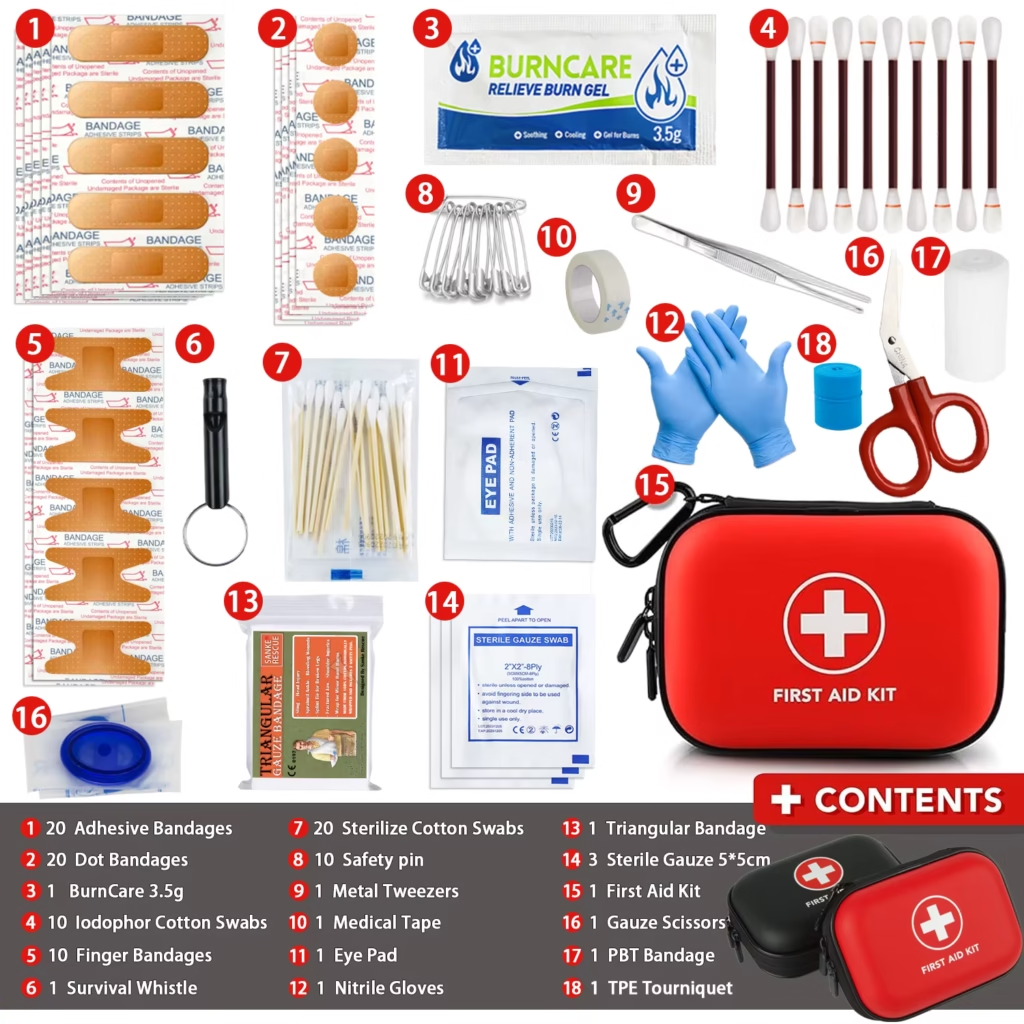
A proper first aid kit is legally required in many countries (Germany, Austria, France, Russia, and several US states for commercial vehicles). Even where it’s not mandatory — keeping one in your trunk handles everything from a paper cut to a serious roadside cut while you wait for help.
| Contents | Detail |
|---|---|
| Bandages | 20+ adhesive, dot, finger, knuckle types |
| Gauze + tape | Sterile pads, medical tape, triangle bandage |
| Tools | Scissors, tweezers, safety pins |
| Extras | Nitrile gloves, alcohol pads, burn cream, eye pad, survival whistle |
| Storage | Compact zip pouch (~7×5×2 inches) |
| Price range | $15–25 |
What I like: The contents list is genuinely comprehensive — most “car first aid kits” sold at gas stations have 4 band-aids and a packet of aspirin. This one has the gauze, tape, and tools you’d actually need to handle a real injury until paramedics arrive. The compact form factor means it fits in any glove box or under-seat space.
What to know: Check expiration dates on adhesive bandages and burn cream every 12 months. Replace anything expired — old medical supplies can be ineffective when you need them.
Bottom line: Cheap, compact, comprehensive. There’s no reason not to have one.
🔦 LED Headlamp with Motion Sensor — Best Hands-Free Light
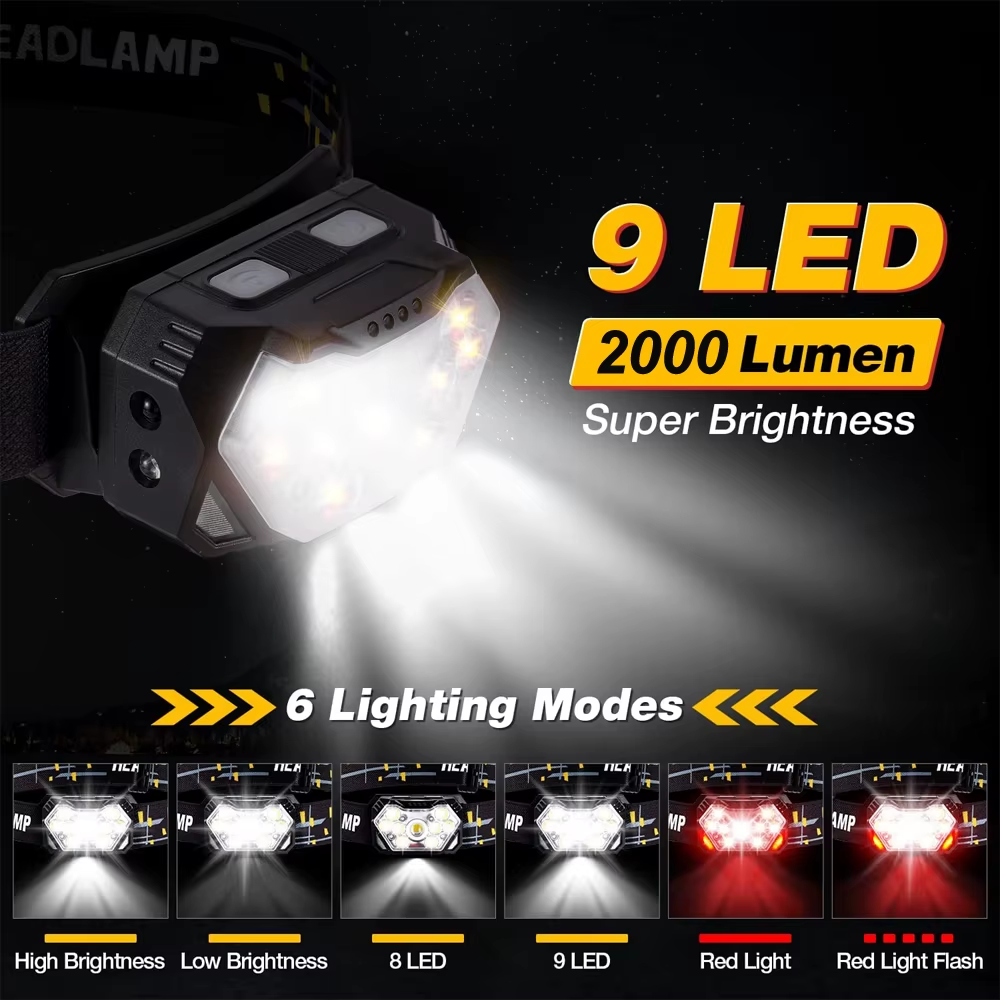
Anyone who’s tried to change a tire at night holding a phone in their teeth knows: you need both hands free. A proper headlamp solves this in one second — and the motion-sensor versions let you turn it on/off with a wave when your hands are dirty.
| Spec | Detail |
|---|---|
| Charging | USB-C rechargeable (no batteries to buy) |
| Modes | White (high/low/strobe), red light (preserves night vision) |
| Sensor | Wave hand near front to toggle on/off — hands-free |
| Strap | Adjustable elastic, comfortable for long use |
| Price range | $8–15 |
What I like: The motion sensor sounds gimmicky until you’re elbow-deep in grease and need to flick the light off without touching it. The red light mode is genuinely useful for checking under the hood at night — it doesn’t kill your night vision the way white light does. USB-C charging means no scrambling for AA batteries.
What to know: Battery life on bright mode is typically 3–4 hours. Charge it monthly along with your other devices. Often sold as a 2-pack — keep one in the car and one at home for power outages.
Bottom line: One of the highest “utility per dollar” items in this kit. Useful for roadside, but also camping, power outages, and DIY work at home.
🦺 Reflective Safety Vest — Best Personal Visibility
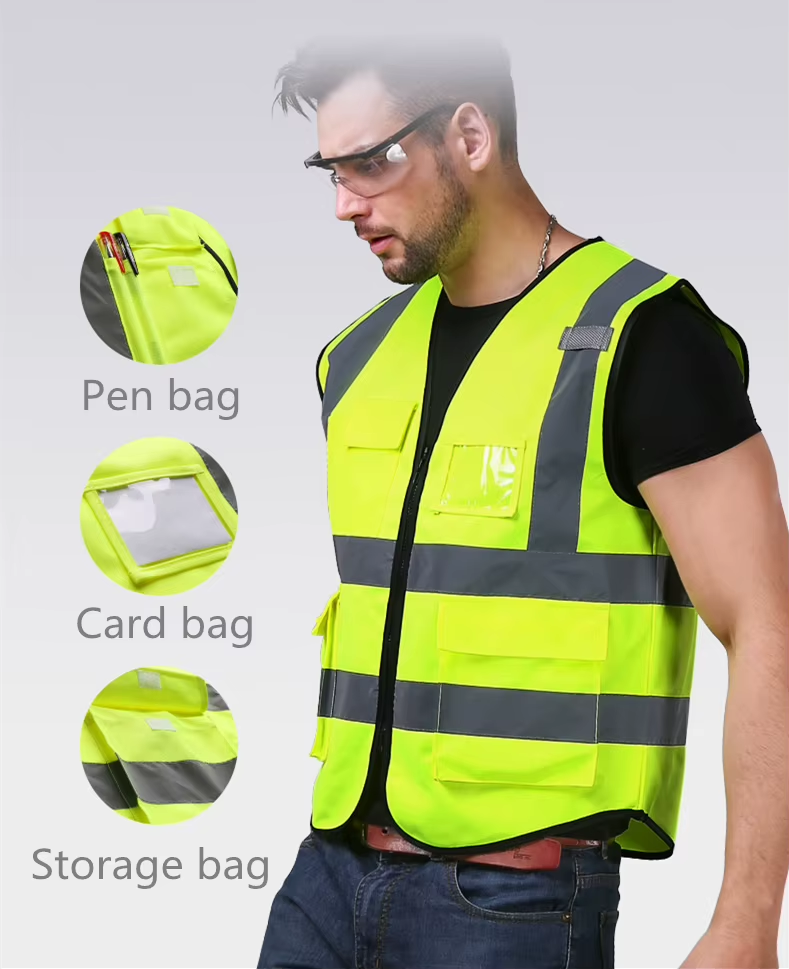
The cheapest life insurance you can buy. A reflective vest makes you visible to drivers from 300+ feet away — without one, you’re nearly invisible at night until headlights are 50 feet from you (which is too late to react). In many EU countries, carrying a vest is legally mandatory.
| Spec | Detail |
|---|---|
| Color | Hi-vis yellow-green (most visible at all times of day) |
| Reflective tape | Silver retroreflective stripes (360°) |
| Pockets | Multiple — chest, side, ID slot |
| Fit | Adjustable, fits over jackets |
| Price range | $5–12 |
What I like: The pocketed version is a real upgrade over the basic vest — you can keep your phone, keys, and a small flashlight on you while working around the car. The yellow-green color is scientifically proven to be the most visible color to the human eye in both day and dusk conditions.
What to know: Keep it in the driver’s door pocket or under the front seat — not the trunk. The whole point is to put it on before stepping out into traffic.
Bottom line: For under $10, this is the closest thing to “buy and forget” peace of mind in this entire kit.
🪑 Folding Chair — Best Comfort While You Wait
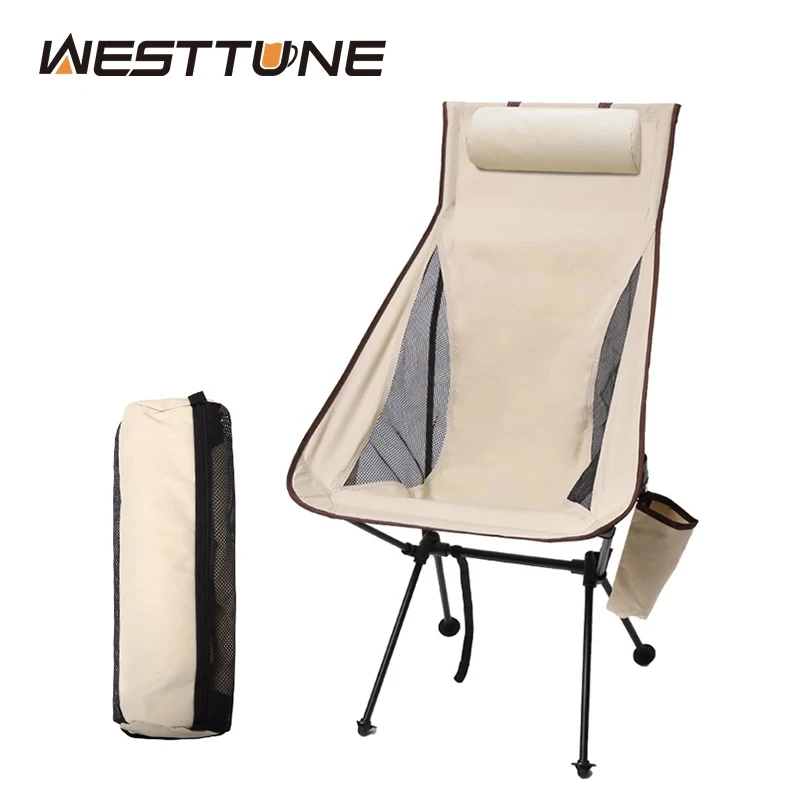
This sounds like a luxury until you’re waiting 90 minutes for a tow on a hot summer afternoon. A lightweight folding chair turns “stranded” into “comfortable.”
| Spec | Detail |
|---|---|
| Brand | WESTTUNE |
| Frame | Aluminum alloy (per the listing title) |
| Design | Folding chair with headrest |
| Buyer rating | 4.9★ across 848 reviews, 5,000+ sold |
| Price range | ~$22 |
What I like: The listing is for a portable folding chair with a headrest and an aluminum alloy frame. The most common buyer comments are that it is easy to assemble and comfortable.
What to know: Check the listing’s packed size and weight against your trunk space before buying — some “compact” chairs are still larger than a backpack.
Bottom line: Not strictly an emergency item, but the difference between standing for an hour on a hot shoulder and sitting in the shade is significant.
☕ Portable Espresso Machine — Best Long-Wait Comfort
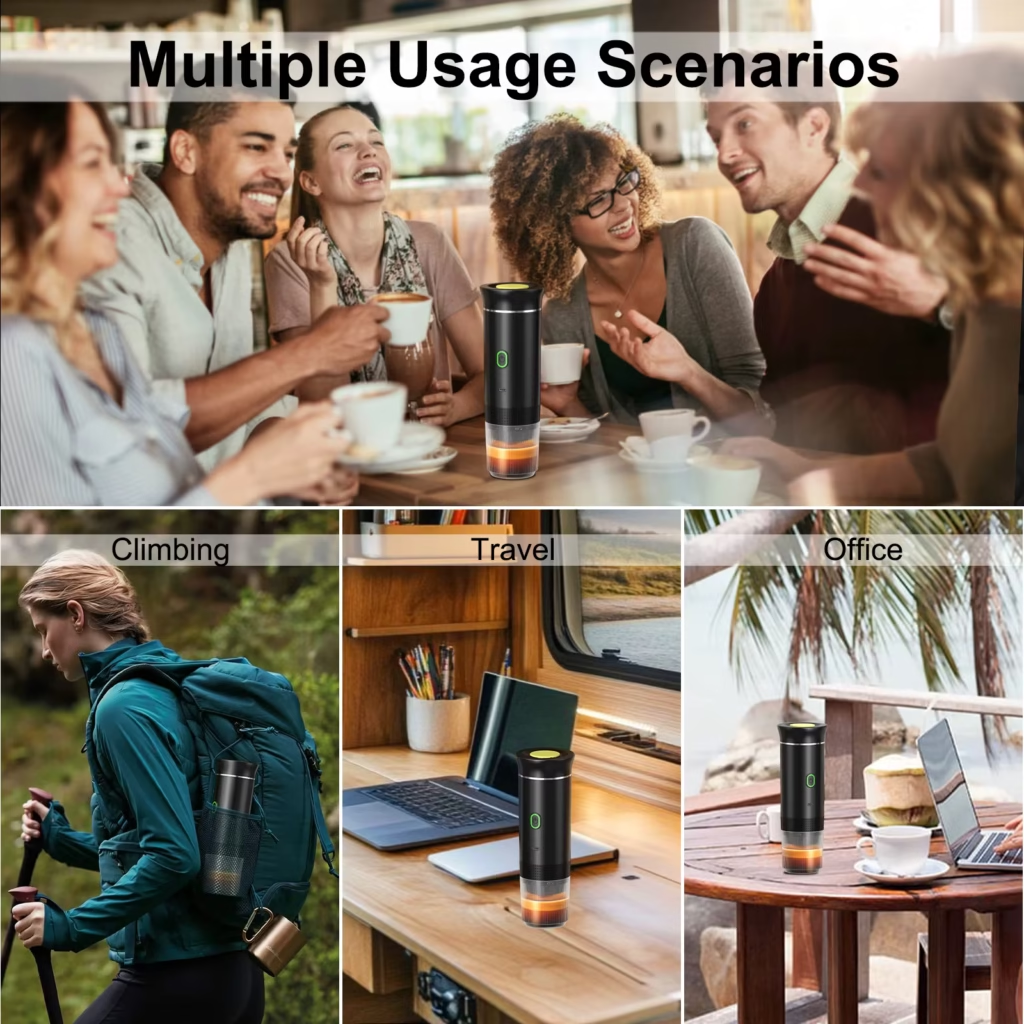
This is the “wait, what?” item on the list — until you’ve been stranded for three hours and would pay anything for a hot coffee. The Denokin runs from a 12V car socket or USB-C battery and makes real espresso, not a sad instant blend.
| Spec | Detail |
|---|---|
| Pressure | 20 Bar (matches countertop espresso machines) |
| Compatibility | Nespresso capsules, DG capsules, ground coffee |
| Power | 12V car socket or rechargeable battery version |
| Brew time | ~3 minutes per shot |
| Price range | $45–80 |
What I like: The 3-in-1 capsule compatibility is the killer feature — you’re not locked into one expensive ecosystem. The 20 Bar pressure is real (not marketing fluff), so the espresso has actual crema. Doubles as the ultimate camping / road trip / hotel room coffee solution.
What to know: Heats water using the car battery — so don’t run it for an hour straight if your engine isn’t on, or you’ll need that UTRAI jump starter. Also: bring your own bottled water.
Bottom line: A “nice to have” that becomes “thank god I have this” the first time you wait two hours for a tow at 6 AM.
5 Things You DON’T Need
Auto parts stores and Amazon are flooded with “emergency kits” that look professional and cost a fortune. Most are overhyped. Here’s what to skip:
1. $200 “premium” emergency kits. Usually $40 worth of cheap tools in fancy fabric packaging. Build your own from this list for half the price and double the quality.
2. Battery-only air pumps with no jump starter. Why buy a $35 pump and a separate jump starter when the UTRAI does both for around $103?
3. “Universal” jumper cables under $10. Thin-gauge wire that melts the first time it carries real current. If you must have cables (instead of a jump starter), spend at least $25 on 4-gauge or better.
4. Glass-breaker hammer / seatbelt cutter combos. They sound essential. They are — if you regularly drive near rivers or coastlines, in a flood zone. For 99% of drivers, they collect dust for a decade. Skip unless you’re in that 1%.
5. Portable shower kits, 12V kettles, car vacuums. These are road-trip extras, not emergency tools. Don’t confuse comfort with safety gear.
Side-by-Side Comparison
| Item | Type | Key Function | Price | Priority |
|---|---|---|---|---|
| UTRAI 5-in-1 Jump Starter + Inflator | Power tool | Jump + inflate | ~$103 | ⭐ Essential |
| Scissor Jack + Wrench | Mechanical | Lift + loosen lugs | ~$27 | ⭐ Essential |
| Tire Repair Kit | Repair | Plug punctures | $10–15 | ⭐ Essential |
| LED Warning Triangle | Visibility | Roadside safety | $15–25 | ⭐ Essential |
| First Aid Kit | Medical | Injury response | $15–25 | ⭐ Essential |
| LED Headlamp | Light | Hands-free work | $8–15 | 🟢 Highly useful |
| Reflective Vest | Visibility | Personal safety | $5–12 | 🟢 Highly useful |
| Folding Chair | Comfort | Long waits | ~$22 | 🟡 Nice to have |
| Portable Espresso | Comfort | Long waits | $45–80 | 🟡 Nice to have |
My Verdict
Here’s what I’d actually do — broken into three budget tiers:
🥉 The Bare Minimum
If you do nothing else, get these three: Tire Repair Kit + Reflective Vest + LED Warning Triangle.
That is a small amount of gear that handles the most common roadside emergency (flat tire) safely and visibly. It fits in a single grocery bag in your trunk and stays out of the way.
🥈 The Recommended Kit
For most drivers, add these: UTRAI 5-in-1 Jump Starter + Inflator, Scissor Jack + Wrench, First Aid Kit, and LED Headlamp.
Together, these cover the most common roadside emergencies — flat tires, dead batteries, low-fuel situations, minor injuries, and visibility safety. This is the kit I’d recommend to a family member.
🥇 The Complete Kit
Add the comfort items: Folding Chair and Portable Espresso Machine.
The chair and espresso machine aren’t strictly emergency gear, but they’re life-changing during a 2–3 hour wait for a tow truck on a remote road. Worth it if you drive long distances, road-trip frequently, or simply value comfort.
Whatever tier you pick: assemble it once, store it well, check it twice a year. That’s the formula for never being caught unprepared.
Looking for more car gear? Check out my companion guides: Are AliExpress Dash Cams Worth It? and Are AliExpress OBD2 Scanners Worth It?
Frequently Asked Questions
Do I really need all 9 items? No. The first 5 (jump starter, jack, repair kit, warning triangle, first aid) are the safety essentials. The other 4 add convenience and comfort. Match the kit to your driving — if you commute 10 minutes in a city, you don’t need the espresso machine. If you road-trip across countries, you’ll thank yourself for it.
How often should I check and maintain the kit? Twice a year. Check the UTRAI is charged (at minimum every 3 months), the headlamp battery has juice, the tire repair plugs aren’t dried out, and your first aid kit hasn’t expired. Five minutes every six months keeps the kit ready.
What if I rarely drive in remote areas? The essentials still apply — most flat tires and dead batteries happen in cities, not in the middle of nowhere. The difference is response time: in a city, you can call a tow in 30 minutes. On a remote road, you might wait 2–4 hours. That’s when the comfort items pay off.
Is AliExpress safe for car emergency gear? Yes, with caveats. Stick to brands with 500+ verified reviews and 4.5+ star ratings. For safety-critical items (jump starters, jacks, first aid supplies), prefer Choice-badged products with regional warehouse shipping. Avoid no-name $5 versions of items that should cost $30+ — they exist for a reason.
How long do these items last? With normal care: jump starters and headlamps last 3–5 years (lithium batteries degrade over time), the jack and wrench last decades, the vest and chair last as long as you don’t lose them. The first aid kit needs refresh every 1–2 years for expired items. The whole kit is essentially a one-time investment with minor refreshes.
Related reading: my guide to portable car jump starters.

I’m Avi, a parent, car owner and tech lover who researches AliExpress finds for real driving life – from dash cams and diagnostics tools to the gear that survives a long road trip with kids in the back seat. I spend hours digging through specs, buyer reviews, and automotive forums (and tracking which travel toys parents report actually stay quiet past mile 50) so you don’t have to – and I only recommend what holds up under real buyer scrutiny.