
By Tipontech
Affiliate Disclosure: Tipontech is a participant in the AliExpress Affiliate Program. I may earn a commission when you click through and purchase, at no extra cost to you. I only recommend products I’d trust on my own cars.
Underinflated tires are one of the most common — and most invisible — safety and cost issues on the road. You can’t reliably tell a tire is 20% low just by looking at it, but it affects your braking distance, fuel economy, and tire lifespan. A TPMS solves that by putting live pressure readings right in front of you.
Quick verdict: Worth it if your car doesn’t already have a built-in TPMS (most cars 2008+ in the US do, by law) — for older cars or as a backup, an aftermarket unit is a cheap way to close a real safety gap.
Does Your Car Already Have One?
US-market cars from 2008 onward are legally required to have a built-in TPMS — check your dashboard for a tire pressure warning light (looks like a cross-section of a tire with an exclamation mark). If you see that symbol capability already, you likely don’t need an aftermarket unit. Older cars, imported vehicles, and some other markets may not have this built in.
My Pick
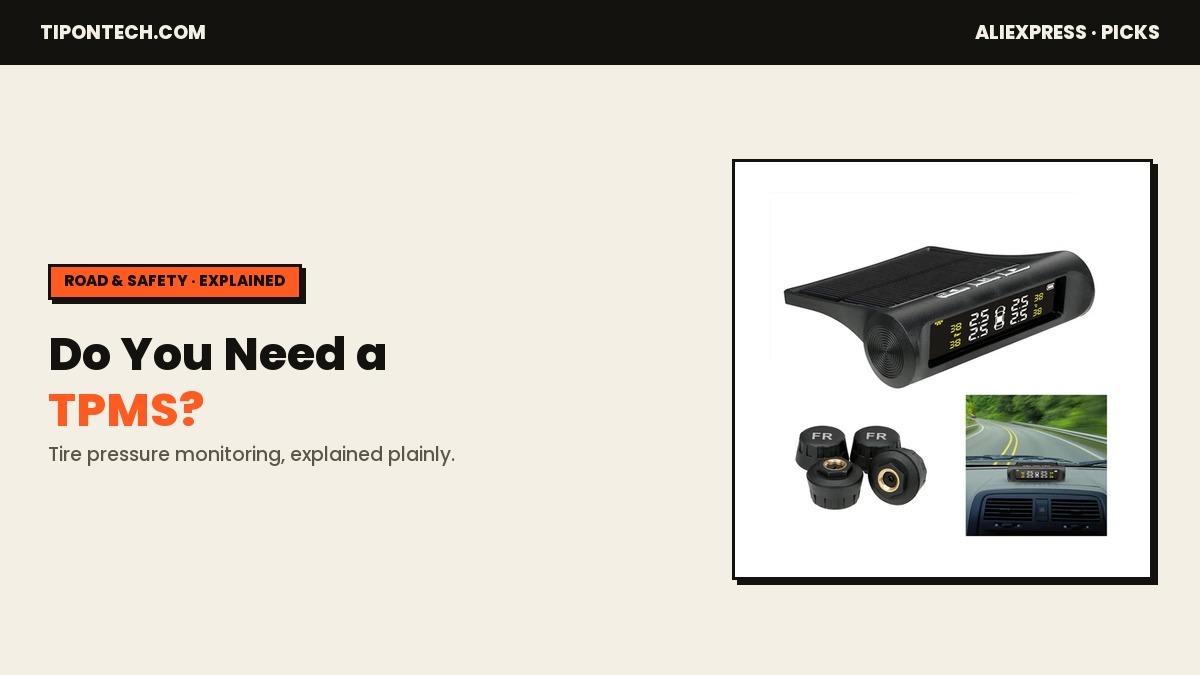
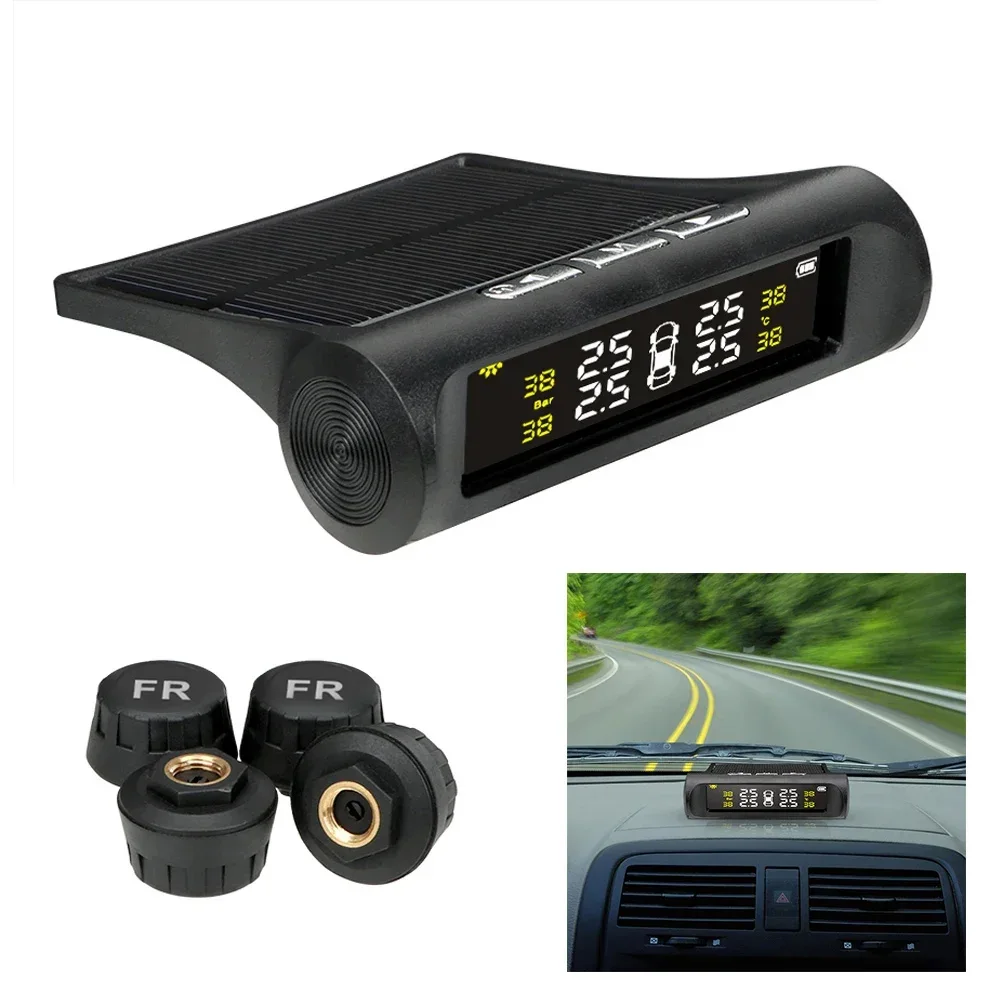
Solar-Powered TPMS with External Sensors
A dashboard-mounted display paired with external cap sensors on all four tires, solar-assisted to reduce battery changes, showing real-time pressure and temperature for each tire individually.
Best for: Older cars without a built-in TPMS, or anyone who wants more detailed per-tire data than a basic warning light provides.
Know before you buy: External cap sensors are more visible (and theoretically more exposed to theft/damage) than internal sensors — check if the listing offers an internal-sensor version if that’s a concern for you.
What to Look For
- External vs. internal sensors. External (cap) sensors are much easier to install yourself; internal sensors require mounting inside the tire (typically at a shop) but are less exposed.
- Solar vs. battery-only. Solar-assisted displays reduce how often you need to change the display’s battery — a small but genuinely convenient feature.
- Individual tire readings. Make sure the display shows all four tires separately, not just a single warning light — that’s the actual value over a built-in low-pressure light.
Frequently Asked Questions
Will an aftermarket TPMS interfere with my car’s built-in system?
No — aftermarket cap/external sensor systems are independent and don’t connect to your car’s factory electronics, so there’s no interference.
How often do I need to replace the sensor batteries?
Varies by product, typically 6-12 months for the wheel sensors; the solar-assisted display itself needs far less frequent charging.
Is low tire pressure really that big a safety issue?
Yes — underinflated tires increase stopping distance, reduce handling precision, wear unevenly, and burn more fuel. It’s one of the cheapest, most overlooked safety maintenance items.
Two more worth checking while you’re at it: a reliable OBD2 scanner for whenever the check-engine light comes on, and a dash cam for peace of mind on every drive.

I’m Avi, a parent, car owner and tech lover who researches AliExpress finds for real driving life – from dash cams and diagnostics tools to the gear that survives a long road trip with kids in the back seat. I spend hours digging through specs, buyer reviews, and automotive forums (and tracking which travel toys parents report actually stay quiet past mile 50) so you don’t have to – and I only recommend what holds up under real buyer scrutiny.